CUSS 2022 Award Winners

Congratulations to our 2022 Award Winners, and much thanks to the award committees. Award recipients will be honored at our section reception at the ASA Annual Meeting in Los Angeles.
Read more







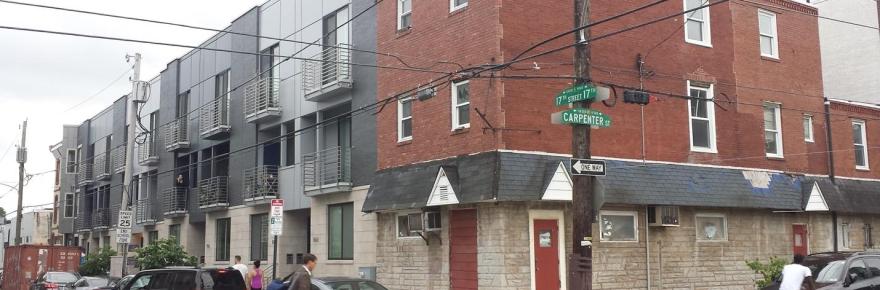
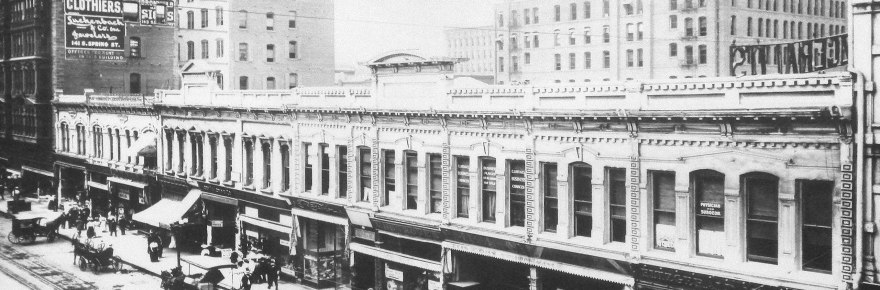
Congratulations to our 2022 Award Winners, and much thanks to the award committees. Award recipients will be honored at our section reception at the ASA Annual Meeting in Los Angeles.
Read moreThe 2021 Jane Addams Article Award was awarded to Josh Pacewicz and John N. Robinson III for their article “Pocketbook Policing: How Race Shapes Municipal Reliance on Punitive Fines and Fees in the Chicago Suburbs.” Published in Socio-Economic Review in 2021, this article draws on both quantitative and qualitative methods to show how municipal reliance on fines and fees varies across race and class lines in the Chicago suburbs. Josh Pacewicz is Associate Professor of Sociology at Brown University, John N. Robinson III is Assistant Professor of Sociology at Princeton University. Andrew Messamore and Benny Witkovsky reached out to John and Josh to discuss their article and an abridged version of that discussion is below. Thanks to John and Josh for participating in our interview series!
Let’s start by talking about this paper. What did you seek to find? What did you ultimately find?
Robinson: We originally wanted to take an exploratory look at the problem of fines and fees, which had become a big topic of dialogue in the aftermath of Ferguson. Once we got into the data, we saw that these monetary punishments were concentrated in many Black suburbs, and especially relatively affluent ones. For context, the financial penalties that we found in these communities (mostly traffic fines, but also things like fines for overgrown weeds) differed from those we would find in much poorer areas (see, for example, Alexes Harris’ pathbreaking work, which focuses on the penalties associated with criminal prosecution). The racialized effect of fines and fees in the lives of poor households and communities is more dramatic and impactful over the long-term. But our findings on these relatively affluent Black areas show that these communities are in some ways more like poorer Black communities than their affluent white counterparts. Importantly, we also found that the places dealing with these penalties also suffered a range of other issues that white affluent communities didn’t, including exorbitantly high property taxes, exploitative tax incentive schemes, deficient public services, etc.
Read moreChair-Elect
Elena Vesselinov, Queens College and the Graduate Center, CUNY
Publications Committee
Jerome Krase, Brooklyn College, CUNY
William Holt, Birmingham-Southern College
Council Member
Samantha Friedman, University at Albany, SUNY
Zachary Levenson, University of North Carolina, Greensboro
Diversity, Equity, and Inclusion Chair
Victoria Reyes, University of California, Riverside
Student Representative
Anna Shetler, Penn State University

Inna Mirzoyan
Michigan State University
CUSS Newsletter Summer 2022, Vol. 35, No. 2
During one of my first weeks as a 2021 Fulbright researcher in Yerevan, Armenia, I explored the capital city’s oldest district, Kond. The Kond district and its ruins have been revitalized with street art and graffiti to attract locals and tourists alike. Immediately, the multiple references to Los Angeles stood out to me. Specifically, one large wall that I photographed reflected the transnational experience of the Armenian Diaspora with large text that read “Yerevan to L.A.” and “Little Armenia.” Six months later, in 2022, I traveled for my second phase of fieldwork in L.A. and saw a similar global conversation happening between diasporans and locals.
Read moreKyle Galindez interviews Marco Z. Garrido author The Patchwork City: Class, Space, and Politics in Metro Manila (University of Chicago Press 2019).
What were the main findings of your research?
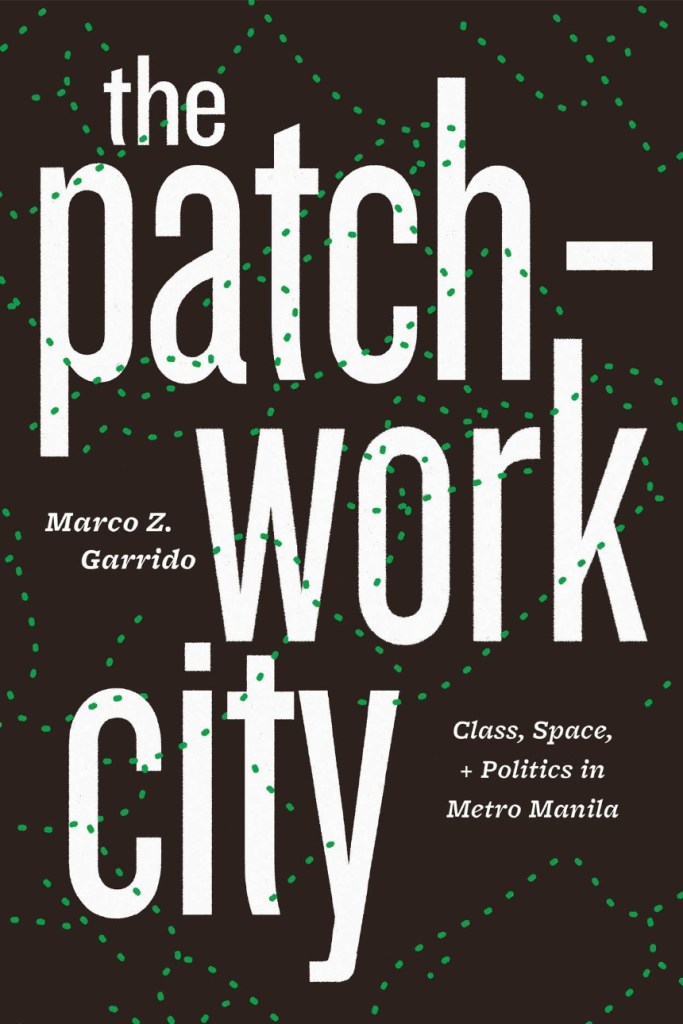
The book’s argument is that the spatial transformation of Manila is worsening class relations and widening the political divide. Specifically, I document the proliferation of poor and upper-class areas—slums and enclaves—across the city and their sharper segregation. I then describe the fraught relations between the residents of these places and argue that segregation—specifically, their proximity to one another—has made their relations worse. Slum residents more frequently experience discrimination, while enclave residents feel insecure about the presence of squatters nearby. I then consider the political views of each group, particularly with respect to the populist president Joseph Estrada. Not only do they tend to see Estrada in polar opposite ways, but their views are substantially informed by their feelings of discrimination and insecurity—that is, by their class positions. Broadly speaking, the books’ argument represents an effort to connect space, class, and politics, or rather, to show how these domains are more continuous than we like to think. Indeed, we should think about them together, as bound up in the same processes. And so while The Patchwork City is a work of urban sociology, it is also, equally, a work of political sociology. It adopts a view of social class as taking shape through spatial segregation (as well as shaping it, of course), and of political subjectivity as being shaped by class relations. Thus, as the city is transformed by global processes, so are social relations and contentious politics.
Read moreSince the end of the civil rights movement of the 1950s and 1960s, large numbers of Black people have made their way into settings previously occupied exclusively by whites. They have received mixed receptions.
Many neighborhoods, schools, workplaces, universities, and other public spaces remain overwhelmingly white. Blacks perceive such settings as the “white space,” which they often consider to be informally “off limits” to them, said Elijah Anderson, Sterling Professor of Sociology and African American Studies at Yale and winner of the 2021 Stockholm Prize, the world’s most prestigious prize in the field of criminology.
Read moreCUSS Newsletter, Winter 2022, Vol. 35, No. 1
Elijah Anderson is the Sterling Professor of Sociology and of African American Studies at Yale University, and one of the leading urban ethnographers in the United States. His publications include Code of the Street: Decency, Violence, and the Moral Life of the Inner City (1999), winner of the Komarovsky Award from the Eastern Sociological Society; Streetwise: Race, Class, and Change in an Urban Community (1990), winner of the American Sociological Association’s Robert E. Park Award for the best published book in the area of Urban Sociology; and the classic sociological work, A Place on the Corner (1978; 2nd ed., 2003). Anderson’s ethnographic work, The Cosmopolitan Canopy: Race and Civility in Everyday Life, was published by WW Norton in 2011. Additionally, Professor Anderson is the recipient of the 2017 Merit Award from the Eastern Sociological Society and three prestigious awards from the American Sociological Association, including the 2013 Cox-Johnson-Frazier Award, the 2018 W.E.B. DuBois Career of Distinguished Scholarship Award, the 2021 winner of the Stockholm Prize in Criminology, and the 2021 Robert and Helen Lynd Award for Lifetime Achievement. For our newsletter, Elijah Anderson has shared part of his latest book, Black in White Space. As noted in the excerpt, Black in White Space is an extension of his previous work. These ethnographies are now considered essential reading in community and urban sociology. In addition to contextualizing his body of work, the excerpt below also addresses his concern for the fragility of American society as a whole.
Read more | Angelo, Hillary. 2021. How Green Became Good: Urbanized Nature and the Making of Cities and Citizens. Chicago: University of Chicago Press. https://press.uchicago.edu/ucp/books/book/chicago/H/bo61910401.html |
 | Bennett, Pamela R., Amy Lutz, and Lakshmi Jayaram. 2021. Parenting in Privilege or Peril: How Social Inequality Enables or Derails the American Dream. New York: Teachers College Press. https://www.tcpress.com/parenting-in-privilege-or-peril-9780807766019 |
 | Fu, Albert S. 2022. Risky Cities: The Physical and Fiscal Nature of Disaster Capitalism. Rutgers University Press. https://www.rutgersuniversitypress.org/risky-cities/9781978820302 |
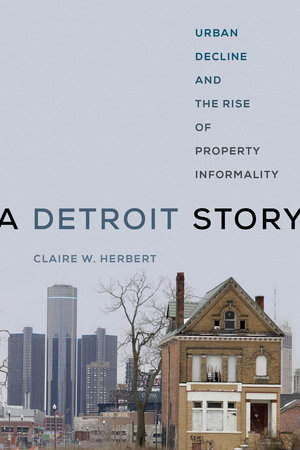 | Herbert, Claire. 2021. A Detroit Story: Urban Decline and the Rise of Property Informality. Oakland: University of California Press. https://www.ucpress.edu/book/9780520340084/a-detroit-story |
 | Horikawa, Saburo. 2021. Why Place Matters: A Sociological Study of the Historic Preservation Movement in Otaru, Japan, 1965–2017. Cham, Switzerland: Springer. https://link.springer.com/book/10.1007/978-3-030-71600-4 |
 | Gordon, Hava. 2021. This is Our School! Race and Community Resistance to School Reform. New York: NYU Press. https://nyupress.org/9781479890057/this-is-our-school/ |
 | Kolb, Kenneth H. 2022. Retail Inequality: Reframing the Food Desert Debate. The University of California Press.www.retailinequality.com |
 | Zachary Levenson. 2022. Delivery as Dispossession: Land Occupation and Eviction in the Post-Apartheid City. Oxford: Oxford University Press.https://global.oup.com/academic/product/delivery-as-dispossession-9780197629253 |
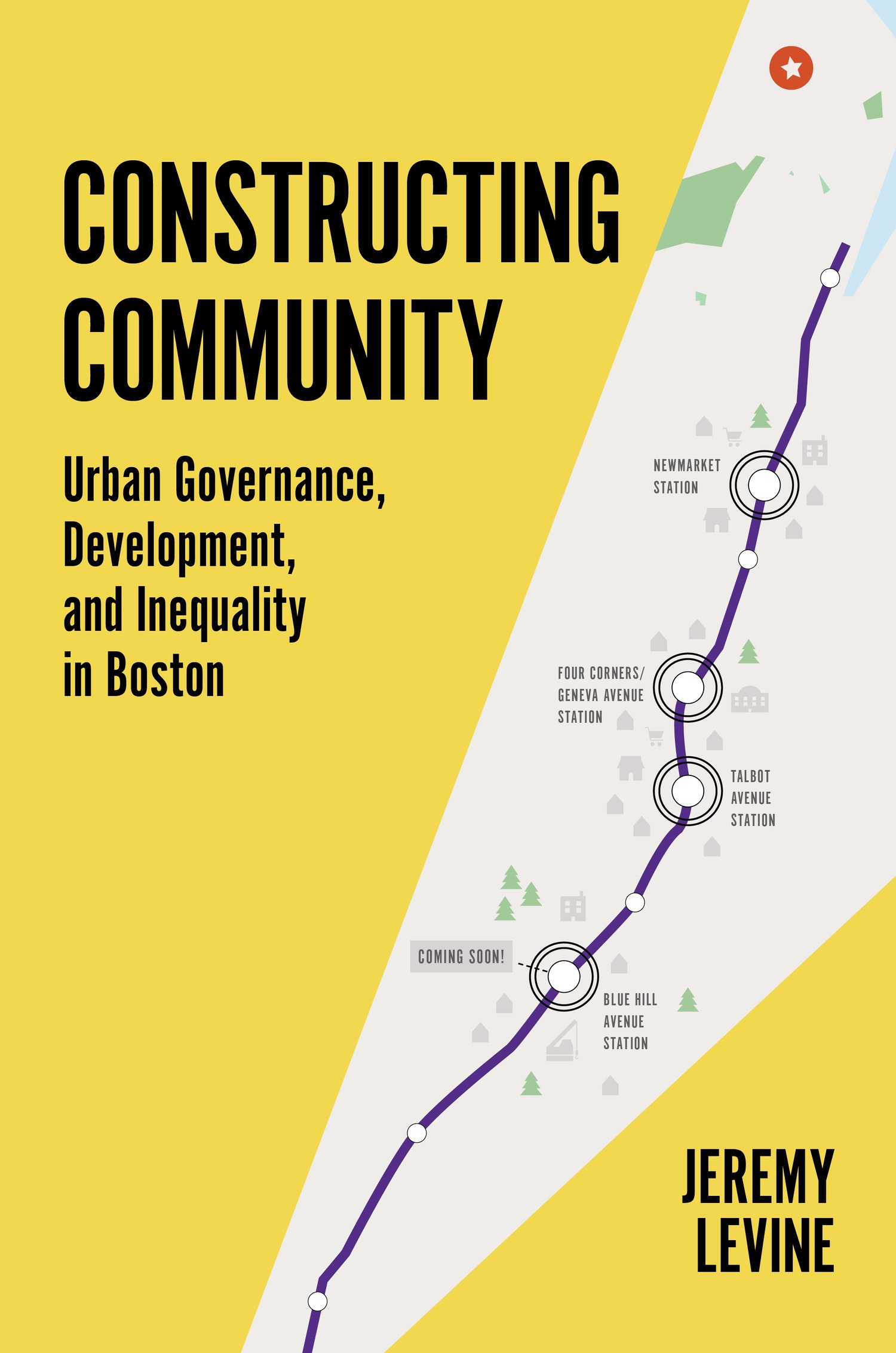 | Levine, Jeremy R. 2021. Constructing Community: Urban Governance, Development, and Inequality in Boston. Princeton University Press. https://press.princeton.edu/books/paperback/9780691193649/constructing-community |
 | Lyon, Dawn (ed.) 2022. Rhythmanalysis: Place, Mobility, Disruption, and Performance. (Research in Urban Sociology, Volume 17, Ray Hutchison, Series Editor). Bingley, UK: Emerald Press. https://www.emerald.com/insight/publication/doi/10.1108/S1047-0042202217 |
 | Moussawi, Ghassan. 2020. Disruptive Situations: Fractal Orientalism and Queer Strategies in Beirut, Philadelphia: Temple University Press. http://tupress.temple.edu/book/20000000009954 |
 | Raudenbush, Danielle. 2020. Health Care Off the Books: Poverty, Illness and Strategies for Survival in Urban America. University of California Press. https://www.ucpress.edu/book/9780520305625/health-care-off-the-books |
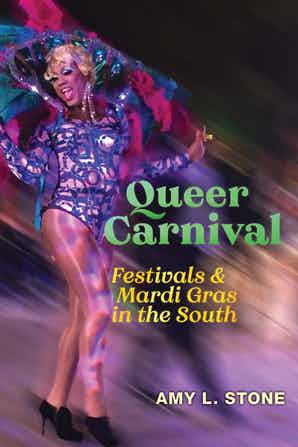 | Stone, Amy L. 2022. Queer Carnival: Festivals and Mardi Gras in the South. New York: NYU Press. https://nyupress.org/9781479801985/queer-carnival/ |
 | Warren, Mark R. 2021. Willful Defiance: The Movement to Dismantle the School-to-Prison Pipeline. New York: Oxford University Press. http://peoplesthinktank.us/willful-defiance/ |
Below are Community and Urban Sociology Section publications submitted by section members between Fall 2021 – Winter 2022.
Read more
