Tag Archives: News & Notes

2025 CUSS Award Winners

Congratulations to our award winners and honorable mentions!

Jane Addams Article Award

WinnerStephanie Ternullo. 2024. “Place-Based Partisanship: How Place (Re) produces Americans’ Partisan Attachments.” American Journal of Sociology, 130(2), 293-343.

Honorable MentionNima Dahir & Jackelyn Hwang. 2025. “Who Owns the Neighborhood? Ethnoracial Composition of Property Ownership and Neighborhood Trajectories in San Francisco”. City & Community, 24(1), 3-25.

Committee: Jan Doering and Christof Brandtner (co-chairs), Emily Walton, Luis Nuño, and Kasey Zapatka.

Book Award

Co-winners:

Randol Contreras (UC Riverside), The Marvelous Ones: Drugs, Gang Violence, and Resistance in East Los Angeles, University of California Press, 2024.

Stephanie Ternullo (Harvard), How the Heartland went Red: Why Local Forces Matter in an Age of Nationalized Politics, Princeton University Press, 2024.

Honorable mention:

Tony Cheng (Duke), The Policing Machine: Enforcement, Endorsements, and the Illusion of Public Input, University of Chicago Press, 2024.

Committee: Tanya Golash Boza (chair), Nate Ela, Jean Lin, Robert Durán, and Janina Selzer

Student Paper Award

WinnerMax Lubell (UT-Austin), “Do Schools Provide a Reprieve from Residential Neighborhood Violence?”

Committee:  Jeremy Levine (chair), Anna Fox, Lacee Satcher, and Jaleh Jalili

Early Career Award

Co-winnersZawadi Rucks-Ahidiana (SUNY Albany) and Elizabeth Korver-Glenn (UNC)

Committee:  Elena Vesselinov (chair), Mervyn Horgan, Jerome Hodos, and Ian Kennedy

Publicly Engaged Research Award

WinnerEsther Sullivan (University of Colorado Denver)

Committee: Jeni Cross (chair), Brandon Alston, Derek Hyra, and Joanne Derouen

Interview w/ Junia Howell and Elizabeth Korver-Glenn

The 2022 Jane Addams Article Award was presented to Junia Howell (University of Illinois Chicago) and Elizabeth Korver-Glenn (Washington University in St. Louis) for their 2021  Social Problems article entitled “The Increasing Effect of Neighborhood Racial Composition on Housing Values, 1980–2015.” Drawing on decades of data from the U.S. Census, their analysis demonstrates that neighborhood racial composition is a stronger determinant of appraised housing values in 2015 than it was in 1980. Thalia Tom reached out to Junia and Elizabeth to discuss their research, and we’ve included Junia’s responses below. Thanks for participating in our interview series!

Read more

Chair’s Message (May 2022)

Dear Colleagues,

I hope all is well as we turn in grades, restore some calm to our lives, and take time to enjoy the summer. We have awarded travel grants to five graduate students. We chose those who are on the market as a key criterion. Congratulations to Kurt Kuehne (UW, Madison), Melanie Brazzell (UC, Santa Barbara, Nathalie Rita (U Hawaii, Manoa), Andrew Messamore (UT, Austin), and Samuel Dinger (NYU). ASA notified me that our business meeting is scheduled for Tuesday, August 9th at 3:00 pm. This is not ideal for good attendance, so we will have the meeting then, but we will distribute the awards at the reception (Sunday, August 7th at 6:30 pm). Finally, please vote in the ASA election! May 27th is the last day to vote.

Warmly,

Rachael Woldoff

CUSS Chair

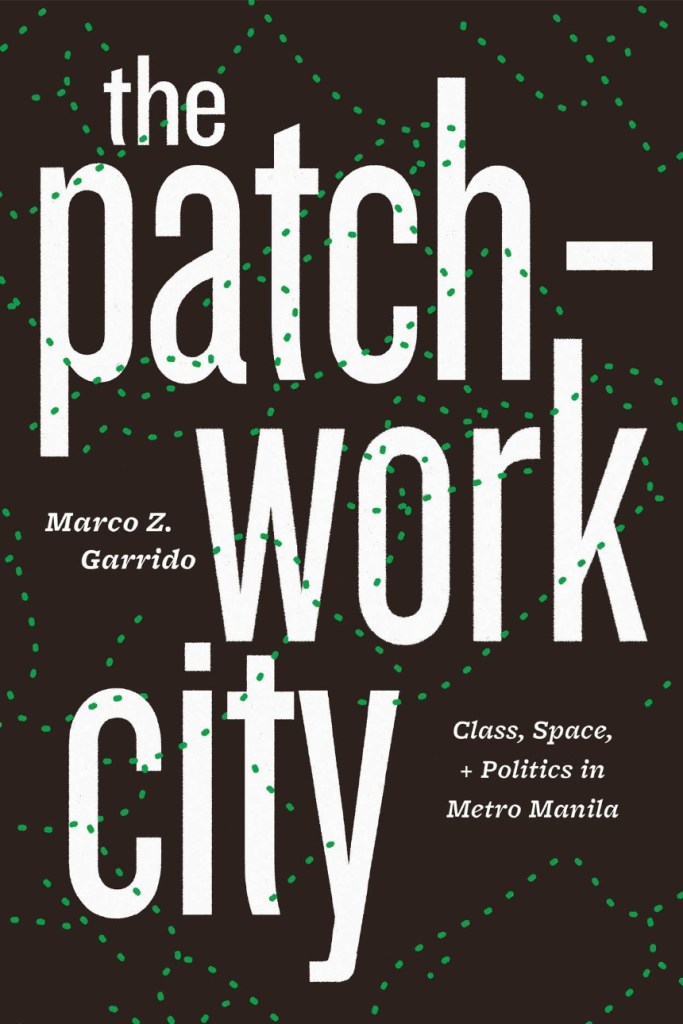
Interview w/ Marco Garrido winner of 2021 CUSS Book Award

Kyle Galindez interviews Marco Z. Garrido author The Patchwork City: Class, Space, and Politics in Metro Manila (University of Chicago Press 2019).

What were the main findings of your research?

The book’s argument is that the spatial transformation of Manila is worsening class relations and widening the political divide. Specifically, I document the proliferation of poor and upper-class areas—slums and enclaves—across the city and their sharper segregation. I then describe the fraught relations between the residents of these places and argue that segregation—specifically, their proximity to one another—has made their relations worse. Slum residents more frequently experience discrimination, while enclave residents feel insecure about the presence of squatters nearby. I then consider the political views of each group, particularly with respect to the populist president Joseph Estrada. Not only do they tend to see Estrada in polar opposite ways, but their views are substantially informed by their feelings of discrimination and insecurity—that is, by their class positions. Broadly speaking, the books’ argument represents an effort to connect space, class, and politics, or rather, to show how these domains are more continuous than we like to think. Indeed, we should think about them together, as bound up in the same processes. And so while The Patchwork City is a work of urban sociology, it is also, equally, a work of political sociology. It adopts a view of social class as taking shape through spatial segregation (as well as shaping it, of course), and of political subjectivity as being shaped by class relations. Thus, as the city is transformed by global processes, so are social relations and contentious politics.

Read more

Recent Books by Section Members (Winter 2022)

Angelo, Hillary. 2021. How Green Became Good: Urbanized Nature and the Making of Cities and Citizens. Chicago: University of Chicago Press. https://press.uchicago.edu/ucp/books/book/chicago/H/bo61910401.html  
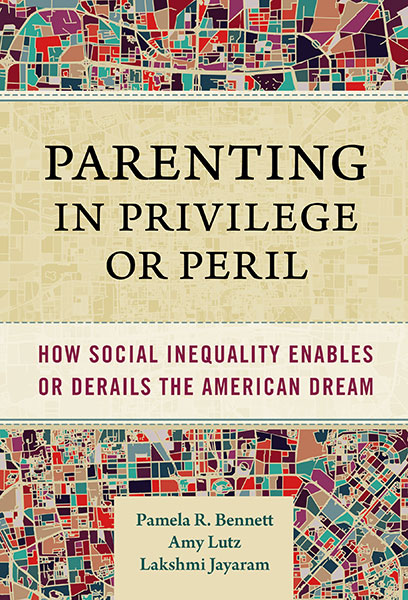
Bennett, Pamela R., Amy Lutz, and Lakshmi Jayaram. 2021. Parenting in Privilege or Peril: How Social Inequality Enables or Derails the American Dream. New York: Teachers College Press. https://www.tcpress.com/parenting-in-privilege-or-peril-9780807766019  
Fu, Albert S. 2022. Risky Cities: The Physical and Fiscal Nature of Disaster Capitalism. Rutgers University Press. https://www.rutgersuniversitypress.org/risky-cities/9781978820302  
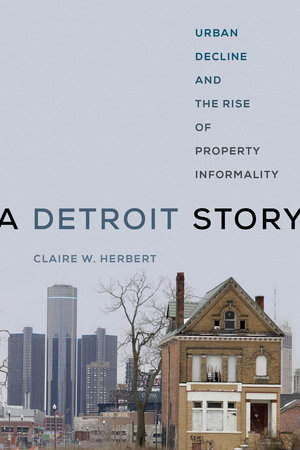
Herbert, Claire. 2021. A Detroit Story: Urban Decline and the Rise of Property Informality. Oakland: University of California Press. https://www.ucpress.edu/book/9780520340084/a-detroit-story  
Horikawa, Saburo. 2021. Why Place Matters: A Sociological Study of the Historic Preservation Movement in Otaru, Japan, 1965–2017. Cham, Switzerland: Springer. https://link.springer.com/book/10.1007/978-3-030-71600-4
Gordon, Hava. 2021. This is Our School! Race and Community Resistance to School Reform. New York: NYU Press.  https://nyupress.org/9781479890057/this-is-our-school/
Kolb, Kenneth H. 2022. Retail Inequality: Reframing the Food Desert Debate. The University of California Press.www.retailinequality.com
Zachary Levenson. 2022. Delivery as Dispossession: Land Occupation and Eviction in the Post-Apartheid City. Oxford: Oxford University Press.https://global.oup.com/academic/product/delivery-as-dispossession-9780197629253
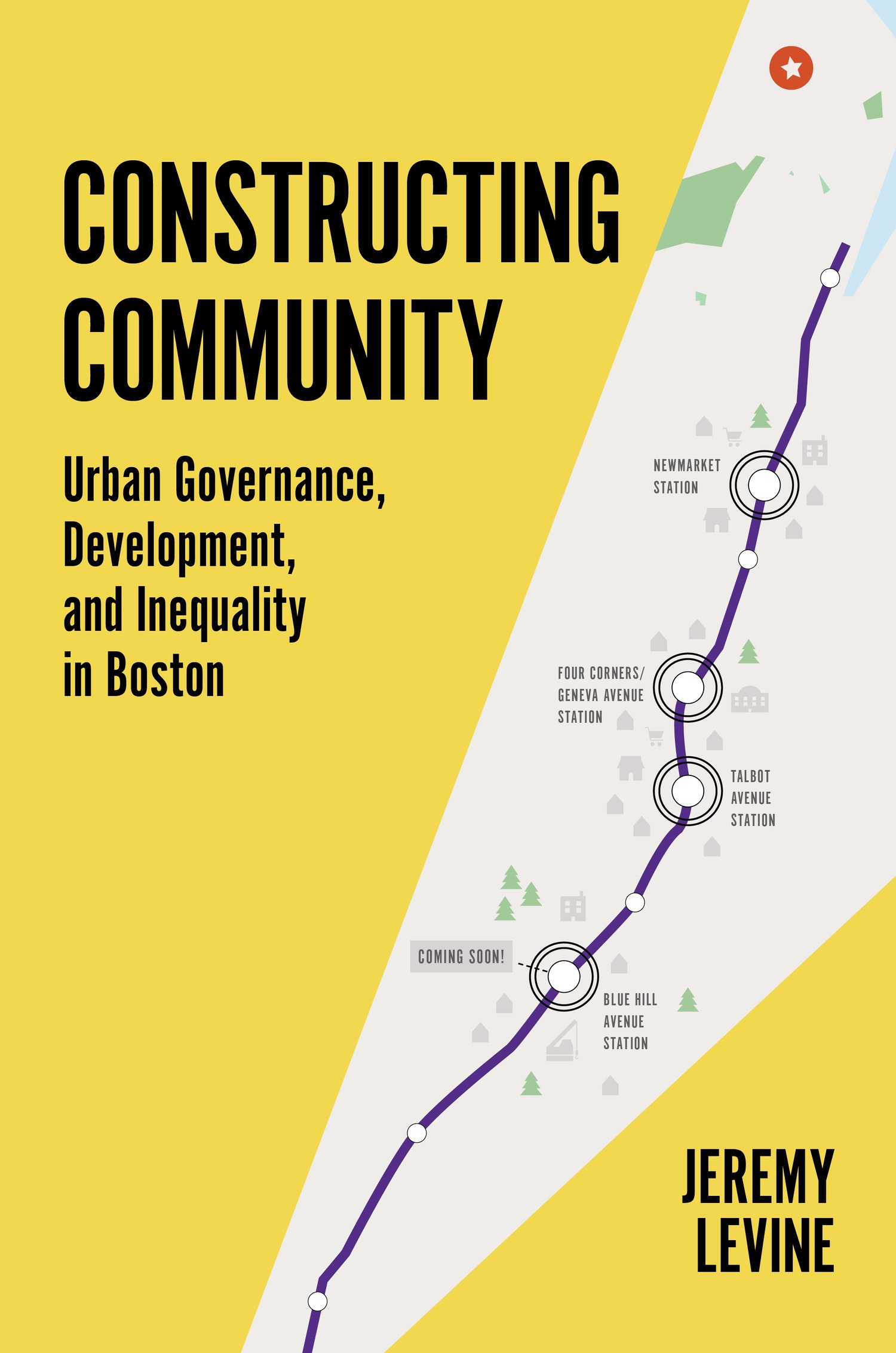
Levine, Jeremy R. 2021. Constructing Community: Urban Governance, Development, and Inequality in Boston. Princeton University Press. https://press.princeton.edu/books/paperback/9780691193649/constructing-community
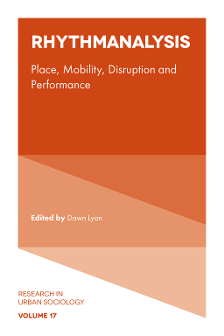
Lyon, Dawn (ed.) 2022. Rhythmanalysis: Place, Mobility, Disruption, and Performance. (Research in Urban Sociology, Volume 17, Ray Hutchison, Series Editor). Bingley, UK: Emerald Press. https://www.emerald.com/insight/publication/doi/10.1108/S1047-0042202217  
Moussawi, Ghassan. 2020. Disruptive Situations: Fractal Orientalism and Queer Strategies in Beirut, Philadelphia: Temple University Press. http://tupress.temple.edu/book/20000000009954
Raudenbush, Danielle. 2020. Health Care Off the Books: Poverty, Illness and Strategies for Survival in Urban America. University of California Press.  https://www.ucpress.edu/book/9780520305625/health-care-off-the-books
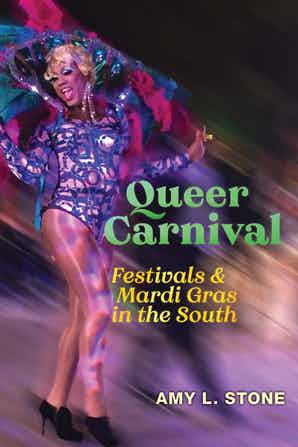
Stone, Amy L. 2022. Queer Carnival: Festivals and Mardi Gras in the South. New York: NYU Press. https://nyupress.org/9781479801985/queer-carnival/
Warren, Mark R. 2021. Willful Defiance: The Movement to Dismantle the School-to-Prison Pipeline. New York: Oxford University Press. http://peoplesthinktank.us/willful-defiance/

Interview w/ George Greenidge Publicly Engaged Scholar Award Winner

CUSS Newsletter, Winter 2022, Vol. 35, No. 1

George (Chip) Greenidge, Jr., a Ph.D. Candidate at Georgia State University, was the winner of the 2021 Publicly Engaged Scholar Award. George is a scholar-activist whose commitments span non-profit work, government service, philanthropy, and education. Recently, he was President of the Boston Empowerment Zone, a federally funded HUD initiative aimed at economic investment in U.S. urban neighborhoods, and the Founder and Executive Director of the National Black College Alliance, Inc., a nonprofit focused on providing alumni mentors to college and high school students. Currently, George is also the Founder and Director of the Greatest MINDS, an organization which aims to promote public discourse, citizenship and inclusive democracy. He is also a Visiting Democracy Fellow at the Ash Center for Democratic Governance and Innovation at Harvard Kennedy School.  Benny Witkovsky and Andrew Messamore reached out to George to discuss his career. Thanks to George for agreeing to participate in our interview! 

Read more

Chair’s Message (Feb 2022)

CUSS Newsletter, Winter 2022, Vol. 35, No. 1

Dear CUSS members,

Welcome to February 2022! I hope you are receiving this message safe or recovered from Omicron. My daughter contracted the variant (fully vaccinated and with few symptoms). It was distressing, but the rest of us managed not to get it. This has been a hard start to the year for many of us, but we are grateful that the surge is declining in many places. 

The ASA submissions deadline has been extended but is approaching (February 16). Please consider submitting your work to our section sessions. Don’t forget to nominate yourself and colleagues for CUSS awards, as well!

Last month I mentioned that Council voted to offer small one-time travel grants to active CUSS student members who are presenting at any panel or roundtable at the 2022 Los Angeles conference. We will offer up to five awards of $300. If the conference is virtual, we will offer to cover the student registration fee. Either way, we will give priority to students with no travel funds. The application deadline is March 15, 2022. I will send more details in March. 

Finally, I wanted to share that I attended an ASA Section Chairs Meeting recently. We discussed the struggles of our members, challenges to sections, and strategies for staying connected and helping our members. I want CUSS members to know that we appreciate that this is a difficult time to pay for and attend a conference in Los Angeles. We know that institutions have cut travel funds and that faculty from a range of institutions are spread very thin and feel burnt out. I hope there will be a way for all of us can participate in the conference this summer. I appreciate all the hard work of our members. You have been of great service to your students, organizations, communities, and families and deserve recognition. 

Warmly,

Rachael Woldoff

Section Chair

CUSS 2022 Meeting Sessions

Dear CUSS Members:

The ASA Annual Meeting submission portal is now open for the 2022 meetings in Los Angeles (deadline for submissions: February 9). Please consider submitting your papers to CUSS Section sessions! This year we will have five open panels (plus a roundtable session).  Below, please find the panels topics, descriptions, and organizers for this year’s CUSS Sessions.   You are welcome to contact the organizers or me (tgreene@bowdoin.edu) with questions about the panel.  

Read more
« Older Entries