Category Archives: Newsletter

Chair’s Message: Summer 2023

Dear CUSS Members,

I hope everyone is enjoying summer.  I am looking forward to seeing many of you at our meetings in Philadelphia this week.  We have been busily planning our section events, starting with our reception which will take place on Thursday evening at the Post.   We have an exciting slate of section sessions that start the next morning with “Reimagining Urban and Community Sociology through Data Science”, followed by “Education and Urban Inequality”, “Climate Change, Urban Inequality, and the Future of Cities”, and “Critical Approaches to the Study of Policing of Urban Spaces”.   Our roundtable sessions cover the following themes: Contesting Urban Governance, Education in the Urban Context, Framing Diversity and Contestation, Gentrification, Getting Housed, Losing Shelter, Housing, Planning, and Politics, Neighboring and Community, Police and Spatial Surveillance, Race and Place, Urban Business and Property, and Urban Theory.  I would like to thank the session organizers for putting together a stellar group of papers.  Our business meeting will immediately follow the roundtables and will include our awards presentations. 

This has been a busy year for CUSS.  Many of the discussions that have taken place during my term have centered on ways to improve the section to foster broader involvement and inclusivity, particularly in both elected and volunteer leadership roles.  One of the most visible steps that has been taken towards this end has been in revamping our awards process, including in the constitution of committees, awards submissions, and evaluations.  We now have a portal for awards submissions that allows collects the same information from all applicants, as well as requiring text based only submission of articles aimed at mitigating some sources of potential bias in the review process.  We are open to suggestions about how to improve these processes moving forward.    

As my term concludes in August, I wanted to express how much of a pleasure it has been to serve CUSS as your chair. I am excited to welcome in the new leadership and opportunities to contribute to the continued growth and success of our section.

Best,

Mary J. Fischer
Practitioner Spotlight: Dr. Esther Hio-Tong Castillo

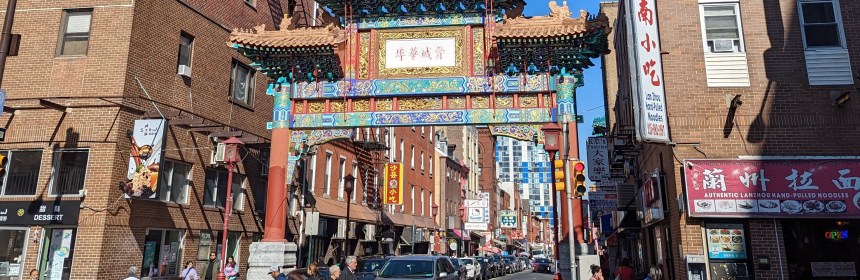
Dr. Esther Hio-Tong Castillo is the Director of Racial Equity, Storytelling, and Community Impact for the City of Philadelphia. Previously, she served as the Programs Manager for the Philadelphia Chinatown Development Corporation. She received her Ph.D. in Sociology from Temple University in 2017. Benny Witkovsky interviewed Dr. Castillo about her work in Philadelphia earlier this spring. Thanks for speaking with us! 

Tell me about the work you have done in Philadelphia with the Asian community.

The first time that I worked directly with the Asian community in Philadelphia was when I volunteered as a Census trainer in Chinatown. In late 2019, the City of Philadelphia was recruiting multilingual trainers to ensure that everyone filled out the census, including immigrants and refugees. At that time, I gave a training presentation in Cantonese to about 100 older residents in Chinatown. To my surprise, they were very enthusiastic about filling out the census. Through this experience, I connected with the Philadelphia Chinatown Development Corporation (PCDC), my former employer. They asked me if I would be willing to lead a program that aims to promote mental health and wellness in the Chinese immigrant community because they just received a grant from the Scattergood Foundation. I said yes. 

Read more

City Spotlight: Landlord Strategies for Avoiding Evictions in Philadelphia

By Melody L. Boyd (SUNY Brockport) and John Balzarini (Delaware State University)

If it’s been a while since you’ve been to Philadelphia, you’ll notice some shimmering additions to the skyline when you arrive for ASA 2023. You’ll likely need to reroute a block or two to navigate around scaffolding and closed streets as you head to dinner after a day of conferencing. You may want to bring a pair of ear plugs to minimize the construction noise as you move around the city. While Gritty was unveiled in 2018 as the Flyers mascot, the city has gotten quite a bit shinier and new in recent years. Of course, as sociologists we know that shiny and new—which on the surface may seem attractive—actually corresponds with increased inequality as competition for housing intensifies. In the context of these changes throughout the city we conducted research looking at the attitudes, perspectives, and experiences of one of Philadelphia’s most important housing providers—landlords. In this article, we highlight some of our findings from this research, focusing on how landlords navigate evictions amidst an increasingly hot Philly housing market.

Read more

Seeking Philly Newsletter Pieces

Source https://commons.wikimedia.org/wiki/File:Philadelphia_cityscape_BW_20150328.jpg

Does your scholarship or activism take place in Philadelphia? If so, the CUSS Newsletter Committee wants to feature your work in our next newsletter! Anyone interested in submitting a feature-length article (approximately 1,000-2,000 words) should contact Co-Editors Lora Phillips (lora.phillips@asu.edu) and Steven Schmidt (seschmid@uci.eduby May 15 with a short (1-5 sentence) description of your proposed article. Final submissions will be due by July 1 in order to ensure inclusion in the summer newsletter.

Interview with John Gilderbloom, winner of the 2022 Robert and Helen Lynd Award for Lifetime Achievement

Against the Odds: The Real Power of Science, Data, and Facts to Win Progressive Victories

John Hans Gilderbloom is a Professor in the Graduate Planning, Public Administra- tion, Public Health, and Urban Affairs program at the University of Louisville. Dr. Gilderbloom is considered one of the most influential figures in urban affairs with an emphasis on sustainability, housing, health and transportation. His fingerprints are all over cities throughout the world. As the winner of the 2022 Robert and Helen Lynd Award for Lifetime Achievement, Dr. Gilderbloom has graciously agreed to be interviewed for our newsletter. Thank you, John, and congratulations!

I am a gunshot survivor. I am grateful to be alive.  But I prefer to let the enemies of science know I have learned to thrive.  The gunshot resulted in a partial loss of eyesight and hearing, and balance issues.  I have post-traumatic stress disorder, despite years of therapy.  Before the shooting, The Nation magazine in May 1979 quoted a letter stating that powerful people in the real estate industry were going to “neutralize me” if I continued to advocate for renter rights.  I was told I would never survive, yet 43 years later I am thriving with energy, passion, joy, and love.  I persisted.  

Read more

Interview with Albert Fu, winner of the 2022 CUSS Teaching Award

Albert Fu is a Professor of Sociology at Kutztown University. As both an urban and environmental sociologist, his research examines the intersection between built and natural environments. Dr. Fu is also interested in how “culture” creates, defines, and controls space. At Kutztown, he regularly teaches Principles of Sociology, Sociological Imagination, Social Inequality, Urban Sociology, and Environmental Sociology. As the inaugural winner of the biannual CUSS Teaching Award, Steven Schmidt reached out to Dr. Fu to discuss his teaching, and we’ve included his responses below. Thanks for participating in our interview series!

Who (or what) inspired you to become a teacher? Did you have any classroom experiences earlier that influenced how you teach now? 

I have had so many great teachers (at all levels) over the years that have impacted my teaching. A story I often share with students is how my high school English teacher Mrs. Karen Harwood recommended that I be moved from the regular curriculum to the honors/advanced placement curriculum – despite not being a 4.0 student. In this way, Mrs. Harwood had a massive impact on my life, and I think it’s essential to pay it forward as an educator. It’s important to look out for creativity and curiosity beyond traditional grades. 

Read more

Interview with Jessica Simes, co-winner of the 2022 Robert E. Park Book Award

Jessica Simes was the co-winner of the 2022 Robert E. Park Book Award for her book, Punishing Places: The Geography of Mass Imprisonment. CUSS publication team member Kyle Galindez reached out to Jessica to discuss the genesis of her book and what is next for her research agenda. Thanks, Jessica, and congratulations again!

What were the main findings of your research?

Punishing Places addresses a fundamental question at the intersection of urban and punishment research: How do place-based disadvantages and residential segregation shape patterns of incarceration in the United States? While mass incarceration has mainly been theorized as the result of macro-level policies or micro-level discrimination, place is an under-appreciated meso-level mechanism of high imprisonment rates and racial disparities. To fill this gap, I apply spatial analysis to administrative records with unprecedented geographic detail that include all prison admissions in Massachusetts spanning 20 years. I contextualize this analysis with U.S. county-level jail and prison admissions data, as well as interview data. I leverage these data to expand our understanding of mass incarceration in three key ways. First, I demonstrate a historically new and nearly universal shift in the location of high incarceration rates from large urban areas to small cities, suburbs, and rural communities. Second, I show why mass incarceration must be conceptualized as a legacy of racial residential segregation in the U.S. I find remarkable consistency in Black and Latino neighborhood incarceration rates despite recent geographic shifts in prison admissions and emergent trends in incarceration rates within white neighborhoods. Finally, I argue that existing measures of mass incarceration fail to capture its broad consequences for community well-being and social inclusion; I thus reconceptualize it as a form of community loss, and draw from environmental science to define a concept of punishment vulnerability.

Read more

Interview with Xuefei Ren, Co-Winner of the 2022 Robert E. Park Book Award

Xuefei Ren (Michigan State University) was the co-winner of the 2022 Robert E. Park Book Award for her book, Governing the Urban in China and India: Land Grabs, Slum Clearance, and the War on Air Pollution. CUSS publication team member Kyle Galindez reached out to Xuefei to discuss the genesis of her book and what is next for her research agenda.

What motivated you to study this research topic? 

My first two books—Building Globalization: Transnational Architecture Production in Urban China (University Chicago Press, 2011) and Urban China (Polity Press, 2013) focused only on Chinese cities only. While working on these projects, I began questioning whether China’s urban experience is as exceptional as specialists often argue. I decided to incorporate a comparative perspective into my work and turned my attention to the urban experience of another enormous, developing country—India.

What were the main findings of your research?

My book challenged two prevalent views on urban governance in China and India. The first is the state-capacity perspective—the view that China’s urban governance is defined by powerful local governments, and India’s by fragmented local authorities. The second concerns regime types—the view that the key differences in urban governance in the two countries can be explained by a country being authoritarian or democratic. I critique these views as reductive and propose an alternative thesis. 

I argue that urban governance in China is territorial in nature as it is anchored on territorial institutions; urban governance in India, by contrast, is associational because it is based on alliance building. The reasons for these disparate approaches, I conclude, are rooted in each country’s historical and institutional development in the longue durée

Post-reform China inherited from previous eras a set of strong territorial institutions (such as the hukou system and dual-track land ownership) and introduced new territorial policies (such as Special Economic Zones) to spearhead urban development. India, lacking strong territorial institutions, bases its urban governance on associational politics, as actors from the state, the private sector, and civil society form contingent alliances to promote policies and projects.

What surprises did you find as you conducted your fieldwork/study?

At the theoretical level, the territorial logic of Chinese urban governance is a surprising insight. It is rarely discussed in urban China studies, which tend to focus on the local state capacity only. It’s an insight that came out of the comparison. 

On the policy level, I was surprised by the imbalance in information and knowledge among Chinese and Indian policy makers. Many Chinese officials and business people simply don’t know much about India. When Chinese officials take international “study tours,” most of them choose to visit the U.S. and Europe. If they knew more about India, they would find many points of comparison to be illuminating and meaningful. On the other hand, Indian policymakers and business leaders know a lot about China. They are very aware of the pitfalls of the Chinese model of development—high levels of inequality, over-investment in infrastructure, unsustainable land-based municipal financing, dominance of state capital, and the large rural-urban divide.

How do you plan to build on this work in the future?

As a University of Chicago-trained urban sociologist who has been studying cities in the developing world, I want to connect the fields of American urban sociology and global urban studies. Building on my research on China and India, I have extended my comparative work to North American and European cities. I’m working on a project about the “global rustbelt”, examining culture-led revitalization in Detroit, Harbin (China) and Turin (Italy). I’m also working on a new project related to the pandemic, with colleagues in Canada and South Africa. We want to study how Chicago, Toronto and Johannesburg differently responded to the pandemic and how the pandemic has affected the most vulnerable neighborhoods in these three cities. 

CUSS Award Nominations

Robert E. Park Book Award
Deadline: March 15, 2023

This award goes to the author(s) of the best book published in the previous 2 years (2021/2022). Submit nominations using CUSS’s page for award submissions, here. Also, mail a hard copy of the book to each committee member (addresses will appear in the nomination form).

Robert E. Park Book Award Committee:
Committee Co-Chair: Xuefei Ren, renxuefe@msu.edu
Committee Co-Chair: Jessica Simes, simes@bu.edu
Michael Gaddis, mgaddis@soc.ucla.edu
Allen Hyde, allen.hyde@hsoc.gatech.edu
Jinwon Kim, JinKim@citytech.cuny.edu

Jane Addams Article Award
Deadline: March 15, 2023

The Jane Addams Award (formerly the Park Article Award) goes to author(s) of the best scholarly article in community and urban sociology published in the previous 2 years (2021/2022). Submit nominations using CUSS’s page for award submissions, here.

Jane Addams Article Award Committee:
Committee Co-Chair: Junia Howell, juniahowell@gmail.com
Committee Co-Chair: Elizabeth Korver-Glenn, kelizabeth@wustl.edu
Denia Garcia, dgarcia28@wisc.edu
Krista Perkins, Kristin.Perkins@georgetown.edu
Nicole Trujillo-Pagan, npagan@wayne.edu

Community and Urban Sociology Graduate Student Paper Award
Deadline: March 15, 2023

The CUSS Student Paper award goes to the student author of the paper the committee regards as the best graduate student paper in community and urban sociology. Submit nominations using CUSS’s page for award submissions, here.

Community and Urban Sociology Graduate Student Paper Award Committee:
Committee Chair: Rahim Kurwa, rak@uic.edu
Bryant Crubaugh, bryant.crubaugh@pepperdine.edu
CalvinJohn Smiley, csmiley@hunter.cuny.edu
Kiara Wyndam-Douds, wyndham-douds@wustl.edu

Robert and Helen Lynd Award for Lifetime Achievement
Deadline: March 15, 2023

This award recognizes distinguished career achievement in community and urban sociology. Submit nominations using CUSS’s page for award submissions, here.

Robert and Helen Lynd Award for Lifetime Achievement Committee:
Committee Chair: John Gilderbloom, john.gilderbloom@louisville.edu
Eileen Avery, averye@missouri.edu
Watoii Rabii, wrabii@oakland.edu
Emily Sandusky, ems444@cornell.edu

CUSS Publicly Engaged Scholar Award
Deadline: March 15, 2023

This award recognizes community and urban sociologists who use their research to make significant and meaningful contributions to public debates, public policy, and/or communities. Submit nominations using CUSS’s page for award submissions, here.

CUSS Publicly Engaged Scholar Award Committee:
Committee Chair: Patricia Snell Herzog, psherzog@iupui.edu
Max Lubell, mlubell@utexas.edu
Chandra Ward, Chandra-ward@utc.edu
Simon Weffer-Elizondo, sweffer@niu.edu

Click here for award submissions Anchor

Interview w/ Junia Howell and Elizabeth Korver-Glenn

The 2022 Jane Addams Article Award was presented to Junia Howell (University of Illinois Chicago) and Elizabeth Korver-Glenn (Washington University in St. Louis) for their 2021  Social Problems article entitled “The Increasing Effect of Neighborhood Racial Composition on Housing Values, 1980–2015.” Drawing on decades of data from the U.S. Census, their analysis demonstrates that neighborhood racial composition is a stronger determinant of appraised housing values in 2015 than it was in 1980. Thalia Tom reached out to Junia and Elizabeth to discuss their research, and we’ve included Junia’s responses below. Thanks for participating in our interview series!

Read more
« Older Entries Recent Entries »