TRAILS

ASA TRAILS

TRAILS, the ASA Teaching Resources and Innovation Library is an online, modular (by topic and type of teaching tool) and searchable database that reflects a major innovation in the creation and dissemination of peer-reviewed teaching resources. In 2016, TRAILS became a member benefit that all ASA members can access.

In recent years it has gone beyond syllabus sets to include a variety of different exercises, PowerPoints, and other teaching materials. This includes material for urban sociology.

Rural Voters and the Rural Vote in 2016

David L. Brown
Cornell University

Shannon Monnat
Penn State University1
CUSS Newsletter, Summer 2018, Vol 30, No 3.

Much has been written about the impact of rural voters, and the rural vote, on the 2016 presidential election. According to The Pew Research Center, Trump beat Clinton in rural areas by 62% to 34%, and by 50% to 45% in the suburbs. In contrast, Clinton bested Trump by 59% to 35% in urban areas. Moreover, Trump’s share of votes grew in direct relation with the degree of urbanization from about 40% in metropolitan areas with 1 million or more people to 58% in smaller metropolitan areas to fully 70% in totally rural counties (Kurtzleben 2016). Research shows that the share of rural votes cast for Democratic presidential candidates since 2000 was highest in 2008, and declined in both 2012 and especially in 2016. Moreover, this pattern characterizes nonmetropolitan counties with and without small and medium sized cities, and to a lesser degree both core and suburban parts of smaller metropolitan areas (See Figure 12). Only large metropolitan core areas avoided the Democratic drop off (Scala and Johnson 2017f).

Read more

Conference Feature: Urban Cascadia

Source: https://commons.wikimedia.org/wiki/File:Seattle_4.jpg

Ryan Centner
London School of Economics
CUSS Newsletter. Summer 2016. Vol 28. No. 3

For those of you attending the Seattle annual meetings: Welcome to the northwestern edge of the Americas – “Cascadia” – a region I am proud to call home, even though I currently live some 5,000 miles away in an increasingly provincial archipelago known as the British Isles. If this is your first encounter with the Pacific Northwest, you may be scratching your head. What is Cascadia? And how can someone so far away still consider it “home”? I aim to answer these questions while briefly conveying some of the distinctive features that define the three largest Northwestern cities of Vancouver, Seattle, and Portland (see map in Figure 1), including innovations and inequalities. Cascadia, to begin, is a somewhat contested term (Helm 1993; Smith 2008; Abbott 2009). As a regional moniker, clearly it references the Cascade Range of mountains that run from northern California up to southern British Columbia. Its vernacular origins derive from popular depictions of the Pacific Northwest as a kind of “ecotopia” (Callenbach 1975; Garreau 1981), reflecting both a unique landscape and unusual society-environment rela-tionship. Seattle-based sociologist David McCloskey (1988: n.p.) developed the notion of a cross-border bioregion, noting that:

Read more

Conference Feature: Where is the Chicago Ghetto?

Source: https://commons.wikimedia.org/wiki/File:Chicago_north_from_John_Hancock_2004-11_img_2618.jpg

Ray Hutchison
University of Wisconsin­-Green Bay
CUSS Newsletter, Summer 2015, Vol. 27, No. 3

Ernest Burgess’s essay, “The Growth of the  City” presents us with one of the iconic images  in urban sociology and  beyond; the concentric zone model has been  reprinted in virtually every  textbook in urban geography, urban sociology, and  more. Burgess is clear  that the purpose of the  model (or chart, as he  labeled it) is to demonstrate the process of  neighborhood succession, a central concept for  the Chicago School: “In the expansion of the  city a process of distribution takes place which  sifts and sorts and relocates individuals and  groups by residence and  occupation. The resulting  differentiation of the cosmopolitan American city into areas is typically all  from one pattern, with  only interesting minor  modifications. Within the  central business district  or on an adjoining street  is the “main stem” of  “hobohemia,” the teeming  Rialto of the homeless  migratory man of the Middle West. In the zone of  deterioration encircling  the central business section are always to be  found the so­called  “slums” and “bad lands,”  with their submerged regions of poverty, degradation, and disease, and  their underworlds of  crime and vice. Within a  deteriorating area are  rooming­house districts,  the purgatory of “lost  souls.” Near by is the Latin Quarter, where creative and rebellious spirits  resort. The slums are  also crowded to overflowing with immigrant colonies—the Ghetto, Little  Sicily, Greektown, Chinatown—fascinatingly combining Old World heritages and American adaptations. Wedging out from  here is the Black Belt,  with its free and disorderly life.”

Read more

2012 Lynd Award: Urban Theory as Context Specification

Terry Nichols Clark
University of Chicago
2012 Fall, Vol. 25, No. 1

I am honored to receive the Lynd Award. I propose to celebrate a truly community approach. My simple argument is that we in the West exaggerate individualism. We give prizes to individuals, seldom teams and themes. Yet, teams are critical in much of social science. Not just for data but for building complex theories which specify how interpretations shift by location. Team members from different locations add value. Most of my publications are coauthored, indicating these debts. When I have been congratulated, I reply, I could not have done it without you. To date no one has disagreed, including the janitor.

Community does not necessarily imply harmony, but can include stimulating disagreement and debate.

Read more

Mile High City: Racial and Ethnic Dynamics

Lucy Dwight
University of Colorado-Denver
CUSS Newsletter, Summer 2012, Vol. 24, No. 3

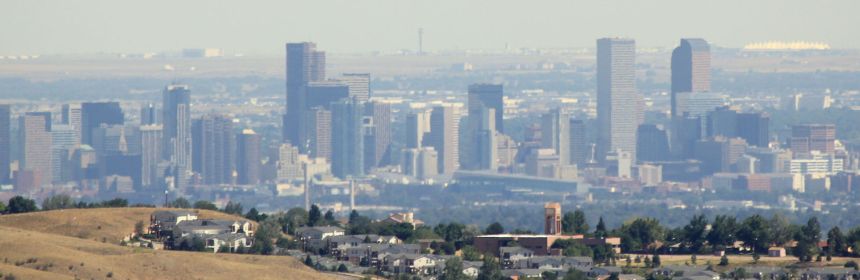
Denver, the Mile High City, is located where the Great Plains meet the Rocky Mountains. Though the area was used as a hunting ground for Native Americans for thousands of years and explored by the Spanish as early as the 16th century, it was the discovery of gold in nearby Pikes Peak that lead to permanent settlement by fortune seekers in 1858. Denver quickly became a regional center due to the Colorado Gold Rush and other extractive booms and busts that continued for well over a century. Although experiencing a major economic downturn and loss of population in the 1980s as the regional oil and gas industry collapsed along with the savings and loan debacle, Denver today is the largest city in Colorado and the Mountain West (denver.org 2012). Similar to other urban areas in the South and West, the greater Denver area has grown rapidly in the last few decades, increasing by 50% between 1990 and 2010, with more than 2.75 million residents in the metropolitan area today (Piton 2011). Denver’s core has grown rapidly as well, to over 600,000 residents, an increase of more than 25% since 1990, after experiencing several decades of population decline (census.gov 2012).

Read more

2011 Lynd Award: Urban Sociology and the Health of the Nation’s Cities

Greg Squires
George Washington University
2011 Fall, Vol. 24, No. 1

The state of urban sociology is probably healthier than that of the nation’s urban and metropolitan areas. I do not think there is a connection. At least I hope this is not the case. But I am reminded of Robert Lynd’s warning from his 1939 book Knowledge for What that academics do not want to be caught “lecturing on navigation while the ship is going down.”

Read more

Recent Entries »