
News & Notes

CUSS Newsletter, Summer 2018, Vol 30, No 3

William Holt, Birmingham-Southern College, received the Henry C. Randall Award for his work establishing the campus chapter of Kapa Alpha Omicron  environmental honor society. Also, Holt serves as the advisor to the  men’s and women’s swimming and diving teams. Both teams are perennially ranked in  the NCAA Division Three ’s Top 20  as well as Southern Athletic Association champions.

Juan Martinez, Harold Washington College, has accepted a tenure-track assistant professor position in the Department of Sociology at Northeastern Illinois University.

Gregory D. Squires, George Washington University, received the 2018 Contribution to the Field of Urban Affairs Award given by the Urban Affairs Association. In announcing the award the UAA observed that “The committee chose Squires based on the influence of his prodigious scholarship examining urban housing markets, and for the breadth of his engagement with the UAA and other national organizations that advance our field. Squires is a prolific scholar who has published 17 books as author or editor, along with 100 journal articles and book chapters. His work is frequently reprinted in collections, offering evidence of his influence on colleagues who assemble such collections. Well beyond scholarly circles, Squires has helped to shape public policy debates about discriminatory lending, redlining, and the near-collapse of the mortgage market in 2008. As an expert witness, a legal consultant, and a working member of commissions and councils, he has called attention to unequal and discriminatory practices and identified policies that advance social justice.”

Stacy Torres, SUNY Albany, has accepted a position as an assistant professor of sociology in the Department of Social and Behavioral Sciences at the University of California, San Francisco, to begin this fall.
 

ASA Conference Feature: Sweet Home

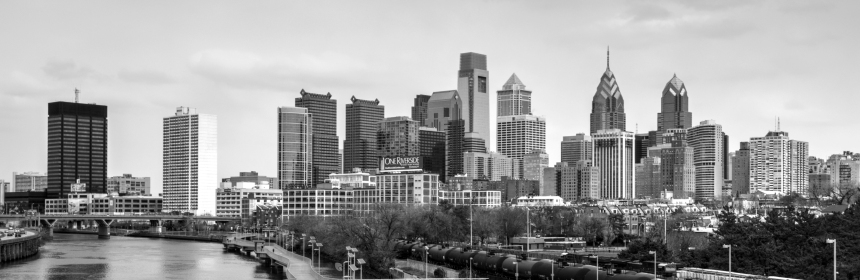
Source https://commons.wikimedia.org/wiki/File:Philadelphia_cityscape_BW_20150328.jpg

Prentiss A. Dantzler
Colorado College
CUSS Newsletter, Summer 2018, Vol 30, No 3

Last time ASA was held in Philadelphia was 2005, the same year I graduated high school. A staple in urban sociology, Philly has undergone many significant changes since then. Being raised in West Philly, my younger years were quite different than that of the Fresh Prince. My childhood functioned somewhat between W.E.B. DuBois’ (1899) Philadelphia Negro and William Julius Wilson’s (1987) The Truly Disadvantaged. In a state of double consciousness, I constantly wondered (at least on a surface) why my neighborhood was the way it was. Countless other works within our field have helped me make sense of different aspects of my childhood. Why was my family adamant about sending me to Catholic school (even though they were not at all Catholic)? Why did I have to take 3 forms of transportation to get to high school while my peers drove in new cars and trucks? What happen to all of the public housing that stood tall in many of the Black neighborhoods? How did I make it out and why are others still in the same place? And better yet, why does “making it out” mean living in white spaces? As a late comer to sociology, the joys and perils of understanding these dynamics within community and urban sociology have largely shaped my reflection on the city of Brotherly Love – a place I still call home.

Read more

Exploring Spatial Equity in Philadelphia through Public Transit and School Choice

Michael R. Scott
University of Texas, Austin

David T. Marshall
Auburn University

CUSS Newsletter, Summer 2018, Vol 30, No 3

As we prepare for spending a few days in Philadelphia at ASA this year, we wanted to share a bit of our research. David has lived and worked in Philadelphia for a few years, and Mike is from not far away and visits often. That said, it’s made for personally compelling research. Given that we are education researchers, our research specifically is on schools. Therefore, we hope this article gives a preview of Philadelphia through our research on the public schools and the public transportation system.

Read more

Announcements

 CULTURAL PLURALISM IN CITIES OF THE GLOBAL SOUTH
European University Institute, Robert Schuman Centre for Advanced Studies,

Florence, Italy
20-22 March 2019

Over the last thirty years, a notable strand of research has focused on global cities: late-modern versions of city-states that construct global profiles, often bypassing any sense of nationhood, and which are characterized by the contemporaneous presence of local/global elites and a low-paid (and often migrant) service class that is indispensable for the city to function. But major centres of socioeconomic and cultural power are clearly emerging outside the West in our current multi-polar and highly dynamic geopolitical and cultural landscape. New scholarship calls into question the “global cities” model and calls our attention to how cities in Asia and Africa are constructing their own relation to the world. This new scholarship emphasises the role of culture, religion, and knowledge circulation rather than focusing primarily on economic and financial life as did earlier approaches.

Read more

2017 Lynd Award: Neighborhood & the City

Robert Sampson

Robert J Sampson
Harvard University
CUSS Newsletter, Spring 2017, Vol. 30, No 2.

Community and urban sociologists have long addressed questions of fundamental concern to the discipline. This centrality continues. Whether racial segregation, the suburbanization of poverty, durable neighborhood inequality, gentrification, the great crime decline, or the globalizaion of cities, the research of CUSS members probes questions relevant to the discipline at large and the general public. I am thus grateful to be honored with the Lynd Award for lifetime achievement and be part of a community of scholars committed to the rigorous study of communities, both past and present.

Read more

Mentorship at ASA Meeting

In recent years, the Community and Urban Sociology Section has hosted mentorship sessions at the annual meeting. We will be organizing small mentoring teams—matching graduate students with junior and senior scholars around areas of interests—to meet over coffee at ASA. These are be informal sessions to talk about anything: the job market, publishing tips, careers, etc.

For participation in the 2018 Annual Meeting in Philadelphia contact:

Jonathan Wynn (wynn@umass.edu)
Prentiss Dantzler II (pdantzlerii@coloradocollege.edu)
Chase Billingham (chase.billingham@wichita.edu)
Albert Fu (afu@kutztown.edu)

2018 Annual Meeting

ASA 2018 Logo v4b

The 113th ASA Annual Meeting will take place August 11-14, 2018 in Philadelphia. Sessions will be held at both the Pennsylvania Convention Center and the Philadelphia Marriott Downtown. The Annual Meeting of the American Sociological Association draws over 5,000 attendees and provides the opportunity for professionals involved in the scientific study of society to share knowledge and new directions in research and practice. Approximately 600 program sessions are convened during the four-day meeting, featuring over 3,000 research papers and invited sessions.

You can view and search the 2018 ASA Annual Meeting Program here.

Montreal as a Gateway-City: Value chains and municipal democracy

Image source: https://commons.wikimedia.org/wiki/File:CentrevilleMontreal%C3%A9t%C3%A9.jpg

Dorval Brunelle
Université du Québec à Montréal (UQAM)
CUSS Newsletter, Summer 2017, Vol. 29, No 3.

This contribution should be read as a historical and sociological introduction to the city of Montreal for our American and Canadian guests attending the 112th ASA meeting here in August. But at the same time, the background here provided will be used to contextualize a research project comparing Montreal with three other Canadian cities (Halifax, Toronto and Vancouver) on their respective policies, programs and actions as gateway-cities. Among the questions raised, we want to know what is the role of the municipal government in this regard, the content of its policies and programs, which stakeholders are involved, and how these policies, programs and actions make their way through the filters of municipal democracy. Although a comparative study, only the Montreal segment will be presented.

Read more

« Older Entries Recent Entries »